Who owns an image created by AI? Can AI-generated artwork be copyrighted? If an AI model was trained on your photographs, do you have any recourse? These questions have moved from theoretical debates to active courtrooms, and the answers are reshaping how businesses, artists, and creators approach AI-generated content.
The Copyright Question: Can AI Output Be Protected?
The short answer, at least in the United States as of 2025: works generated entirely by AI cannot be copyrighted. The U.S. Copyright Office has consistently held that copyright requires human authorship.
The landmark case was Thaler v. Perlmutter (2023), where Stephen Thaler sought to register a copyright for an image generated entirely by his AI system, DABUS. The court ruled that "human authorship is a bedrock requirement of copyright" and that a work produced autonomously by a machine cannot be registered. This ruling was upheld on appeal in 2024.
However, the Copyright Office has recognized that works involving a mix of human and AI contributions may be eligible for partial protection. If a human artist uses AI as a tool (actively selecting, arranging, or modifying the output), the human-authored elements may qualify for copyright. The key question is whether there is sufficient human creative control over the final work.
Training Data: The Fair Use Battleground
Perhaps the most consequential legal question isn't about AI output; it's about AI input. Major AI image generators were trained on billions of images scraped from the internet, many of them copyrighted works. This has sparked a wave of litigation:
- Getty Images v. Stability AI: Getty sued Stability AI for using millions of its copyrighted stock photos to train Stable Diffusion without permission or compensation. The case is being closely watched as a test of whether large-scale training data scraping constitutes fair use.
- Artist class actions: Multiple groups of artists (including illustrators, photographers, and concept artists) have filed suits against AI companies, arguing that their work was used without consent to train models that now compete directly with them.
The AI companies generally argue that training on copyrighted material constitutes fair use, a transformative use similar to how a human artist might study other works to develop their own style. Critics counter that there's a fundamental difference between a human learning from art and a machine copying billions of images to statistically reproduce their patterns.
Who Owns AI-Generated Images?
The ownership question creates a practical gap. If AI-generated images can't be copyrighted, then technically nobody "owns" them in the traditional IP sense. This has several implications:
- No exclusive rights: You cannot prevent others from using an AI-generated image that you created, since you hold no copyright over it.
- Platform terms matter: While copyright law may not protect AI output, the terms of service of AI platforms may grant users certain usage rights. Read the fine print; terms vary widely between platforms.
- Trade secret protection: Your specific prompts and workflows might be protectable as trade secrets, even if the resulting images aren't copyrightable.
International Perspectives
The legal picture varies globally. The European Union's AI Act, which began enforcement in phases starting in 2024, requires that AI-generated content be clearly labeled and that training data sources be documented. The UK has explored a more permissive approach, with proposals to allow broader text and data mining for AI training. China has implemented regulations requiring watermarking of AI-generated content. Japan has generally taken a more permissive stance on training data use.
Practical Guidance for Businesses
Given the evolving legal terrain, businesses using AI-generated images should take a cautious approach:
- Don't assume you own it. Treat AI-generated images as if they have no copyright protection. Don't build brand-critical assets (logos, signature imagery) on AI-generated content that competitors could freely copy.
- Document your process. If you substantially modify or curate AI output, keep records of your human creative contributions. This may support partial copyright claims.
- Review platform terms. Understand what rights your AI tool's terms of service grant you, and what limitations apply.
- Consider the ethical dimension. Even if something is legally permissible, using AI models trained on artists' work without compensation carries reputational risk, particularly in creative industries.
- Stay current. This area of law is evolving rapidly. Major court decisions expected in 2025 and 2026 could reshape the field.
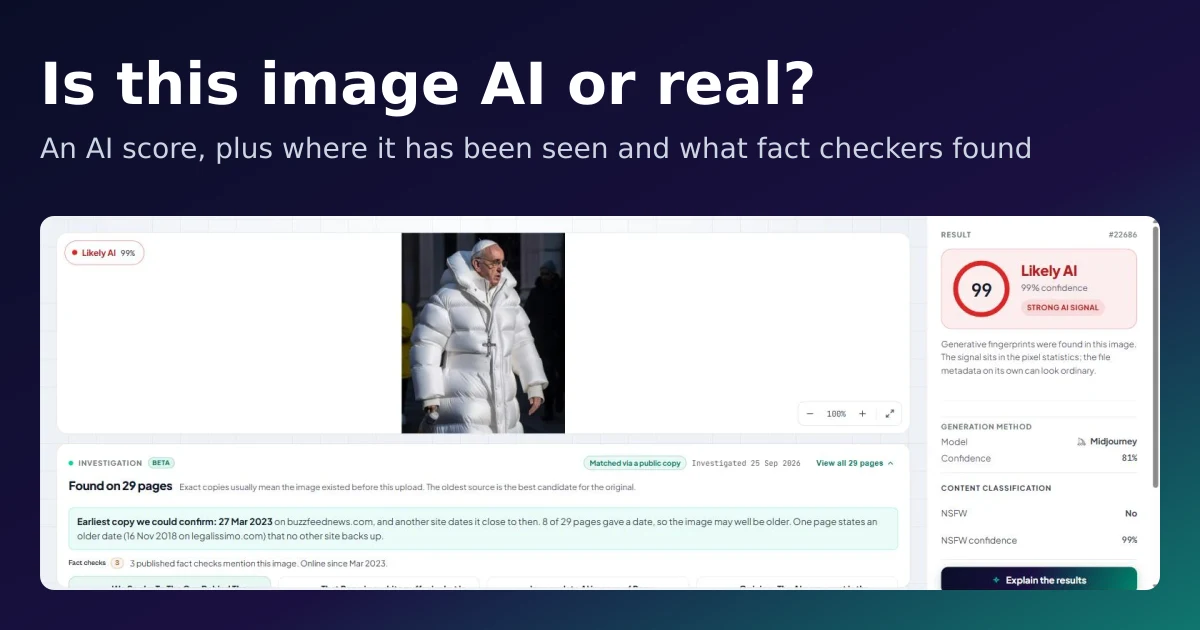
The intersection of AI and intellectual property is one of the most actively developing areas of law. For businesses and creators working through this space, the safest approach is to stay informed, document everything, and err on the side of transparency. Understanding how AI art tools work is a good foundation for making informed decisions about their use in your projects. And if you need to verify whether a specific image is AI-generated, our AI Image Detector can give you an answer in seconds.