
Verification
Kate Middleton Edited Photo: What Fact-Checkers Found
The March 2024 palace photo was edited, not AI-generated. What the news agencies found, what fact-checkers said about the video, and the checks anyone can copy.
In March 2024, Kensington Palace released a family photo of Catherine, Princess of Wales, and the same day the world's biggest news agencies withdrew it because it had been edited. It was not an AI image: the Princess said she had been experimenting with editing. The story is still one of the clearest lessons in how professionals check a photo, and why "edited" and "AI-generated" are different questions.
Below is what happened, what people noticed, what the fact-checkers found about the video questions that followed, and how to use the same habits on the next viral image you see.
Key Takeaways
- AP, Reuters, AFP and Getty withdrew the palace photo on 10 March 2024 because it had been manipulated in a way that broke their photo standards.
- AP said there was no suggestion the photo was fake; the Princess apologised and said she had experimented with editing.
- A photo can be real and still edited, so "was it edited?" and "was it made by AI?" need separate checks.
- Claims that a later palace video was an AI deepfake were checked and rated false by fact-checkers.
What Happened to the Kensington Palace Photo?
On Sunday 10 March 2024, Mother's Day in the UK, Kensington Palace shared a photo of the Princess with her three children. The palace said Prince William took it. News agencies sent it to their clients, as they do with official handout pictures.
The same day, the Associated Press, Reuters, AFP and Getty Images withdrew the image. According to AP's report, carried by PBS NewsHour, AP retracted it after closer inspection showed the source had manipulated the image in a way that did not meet its photo standards. Britain's PA agency followed, saying that without clarification from the palace it was "killing the image from our picture service".
On 11 March the Princess posted an apology: "Like many amateur photographers, I do occasionally experiment with editing. I wanted to express my apologies for any confusion the family photograph we shared yesterday caused." Kensington Palace said it would not release the original, unedited photo.
Why Did News Agencies Pull the Photo?
Agencies like AP and Reuters supply pictures to newsrooms around the world, so their rules on editing are strict. When they find a handout image has been changed in a way their standards don't allow, they send a "kill" notice telling clients to stop using it. That is what happened here.
AP gave one concrete example: an inconsistency in the alignment of Princess Charlotte's left hand. AP also said there was no suggestion the photo was fake. In other words, the agencies were not saying the scene never happened. They were saying the picture had been altered more than they could accept.
What Signs of Editing Did People Spot?
Once the agencies pointed at the hand, people online went through the photo pixel by pixel. Fortune's round-up lists what commentators pointed to: Charlotte's left hand appearing to jut out of her sleeve at an unnatural angle, the absence of the Princess's rings, and leaves on the trees that seemed unlikely for early March in Britain.
Those clues are not equal. A misaligned hand or sleeve edge is the kind of seam an edit leaves behind, and it is what AP named. Missing jewellery or leafy trees prove nothing on their own: people take rings off, and a photo can be older than its release date. Good checking means telling the strong signs from the weak ones.
For a full list of the strong signs, such as soft edges, broken patterns and garbled text, see our guide on how to tell if a photo has been edited with AI.
Was the Kate Middleton Photo Made With AI?
Nothing in the agencies' statements or the palace's response said the photo was AI-generated. AP said there was no suggestion it was fake, and the Princess described ordinary editing. The scene was real; parts of the picture were changed.
That difference matters when you check images yourself. An AI image detector answers one question: how likely it is that an image was generated by AI. A real family photo with a few edits is still a real photo, so a detector result alone could never settle what the agencies were asking, which was whether the photo had been altered.
The Second Photo: Getty's Editor's Note
The questions did not stop with one picture. On 19 March 2024, CNN reported that Getty Images had added an editor's note to another palace photo: Queen Elizabeth II with her grandchildren and great-grandchildren, taken by the Princess at Balmoral in 2022 and published in April 2023.
The note said the image "has been digitally enhanced at source." Getty said it was reviewing handout images and adding notes where the source had suggested they could be digitally enhanced. CNN's own analysis found signs of alteration in as many as 19 places, including a misalignment on the Queen's skirt and strands of Princess Charlotte's hair that appeared to have been cloned.
The lesson for readers: agency notes travel with an image. If a photo you are checking comes from Getty, AP or Reuters, the caption and any editor's note on the agency's own page are worth reading before you share it.
The Video Questions: What Fact-Checkers Found
On 22 March 2024, Kensington Palace released a video message from the Princess. Because of the photo story, some posts claimed the video was an AI deepfake. One popular claim said her wedding ring vanished mid-video, proving it was generated.
Full Fact checked that claim and rated it false. In high-quality versions of the video, the ring briefly blurs as she moves her left hand but can be seen throughout. It only seems to disappear in low-quality or slowed-down copies.
The production was also on the record. BBC Studios said it "filmed a message from the Princess of Wales at Windsor this week", and PA reported that BBC Studios made no edits to the recording and had no editorial input into the message.
The lesson: compression and slow motion create glitches of their own. Before you call a video fake, find the original upload at the best quality you can, and check who made it.
How to Check a Viral Photo Yourself
The professionals in this story used a handful of habits anyone can copy:
- Go to the source. Find where the image first appeared, at the highest quality available. Screenshots and reposts add blur and artifacts.
- Look for seams, not vibes. Hands, sleeves, edges, straight lines and repeating patterns show edits. Missing jewellery or odd weather do not.
- Read the notes. Agency captions, editor's notes and withdrawals tell you what professionals found.
- Check published fact-checks. Search the claim plus "fact check" before sharing.
- Ask the right question. Use the IsItAI.com AI image detector to see how likely it is that an image was AI-generated, and treat the result as a probability, not proof.
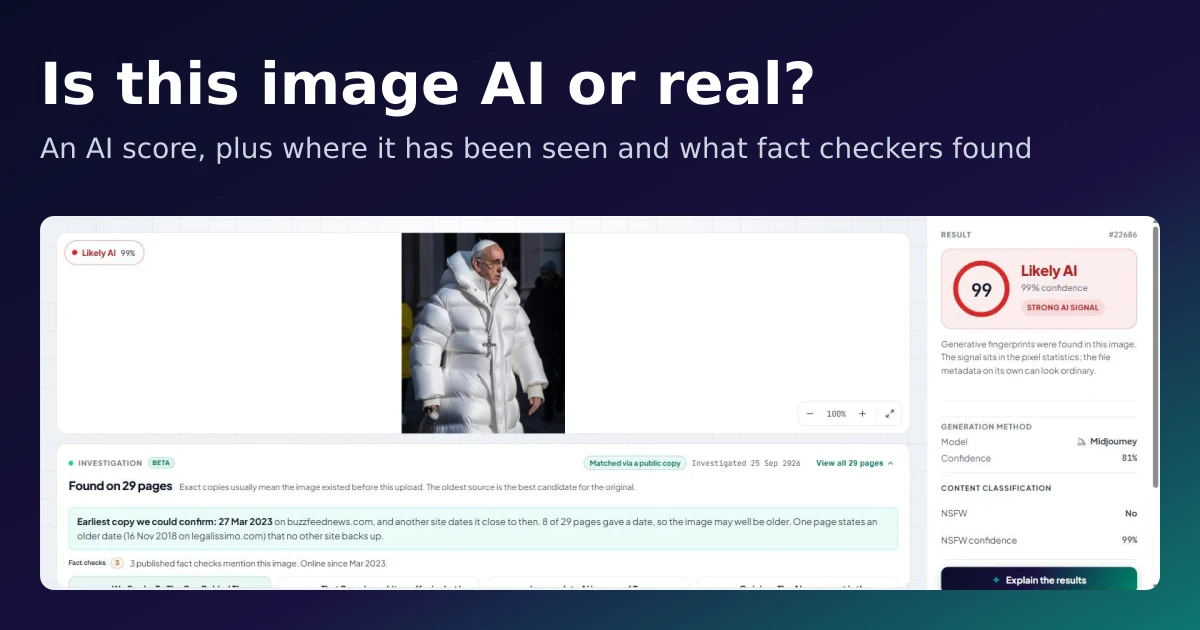
For a step-by-step walkthrough that combines a detector score with where an image has appeared online, read Is This Image AI or Real?
Check a photo yourself
Upload it to the detector. Investigate online shows where it has appeared before.
Frequently Asked Questions
Why was the Kate Middleton photo withdrawn?
AP, Reuters, AFP and Getty withdrew the Kensington Palace photo on 10 March 2024 because it had been manipulated in a way that did not meet their photo standards. AP pointed to an inconsistency in the alignment of Princess Charlotte's left hand. Britain's PA agency also pulled it after asking the palace for clarification.
Was the Kate Middleton photo AI-generated?
No published report said so. AP said there was no suggestion the photo was fake, and the Princess said she had experimented with editing. The scene was a real family photo; parts of the image were changed. That makes it an edited photo, which is a different question from whether an image was made by AI.
Was the Princess of Wales video from March 2024 a deepfake?
Fact-checkers found no evidence it was. Full Fact rated the claim that her ring vanished as false: in high-quality versions the ring blurs briefly but stays visible. BBC Studios said it filmed the message at Windsor, and PA reported that BBC Studios made no edits to the recording.
Can an AI image detector tell if a photo was edited?
An AI image detector estimates how likely it is that an image was generated by AI. A real photo with a few manual edits can still look human-made to it. To check for edits, look for seams such as misaligned edges or broken patterns, compare with the original if you can find it, and read any agency notes or fact-checks.
Sources
- Associated Press via PBS NewsHour, Kate, Princess of Wales, apologizes for editing family photo, 11 March 2024, retrieved 2026-10-17, pbs.org
- Fortune, coverage of the agencies' kill notices and the details commentators pointed to, 11 March 2024, retrieved 2026-10-17, fortune.com
- CNN via KTVZ, Kate's photo of late Queen was doctored, agency says, 19 March 2024, retrieved 2026-10-17, ktvz.com
- PA Media via The Irish News, No edits made to Kate's video message, 22 March 2024, retrieved 2026-10-17, irishnews.com
- Full Fact, fact check of the claim that the Princess's ring vanishes in her video message, 26 March 2024, retrieved 2026-10-17, fullfact.org
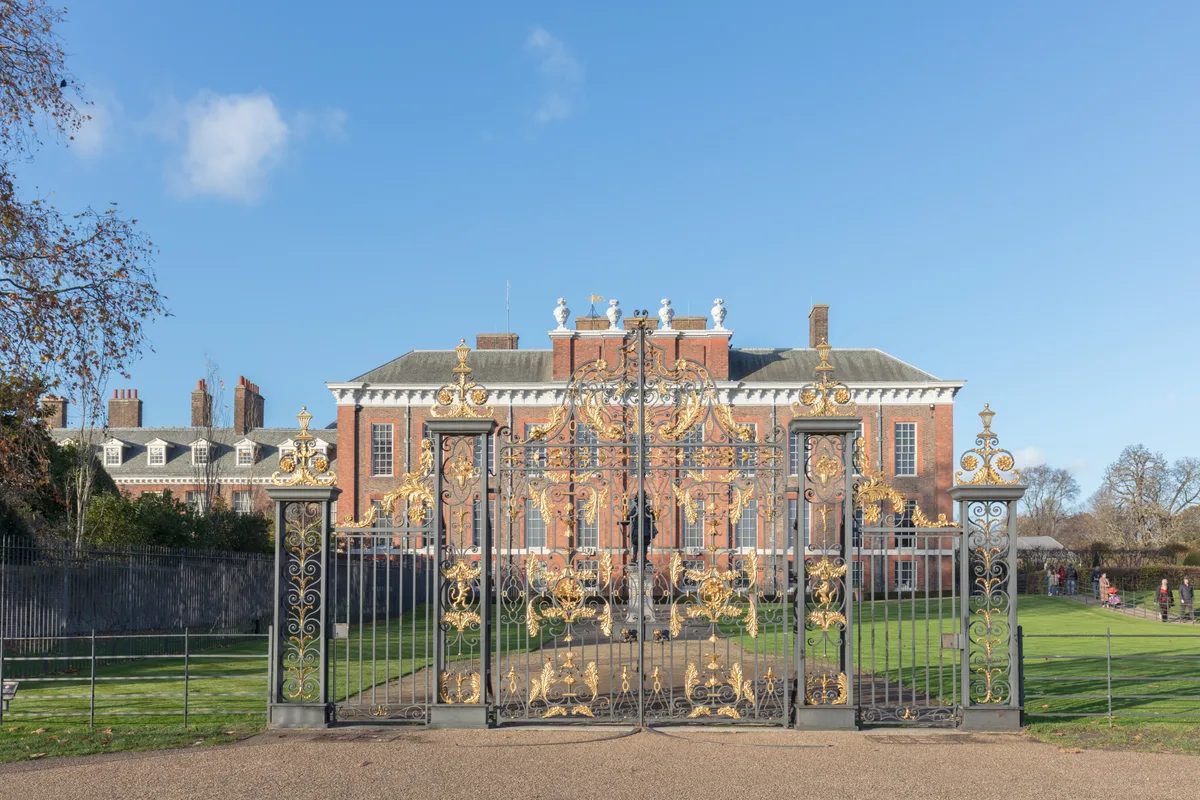
Featured photo: Kensington Palace, London, by Diego Delso, CC BY-SA 4.0, via Wikimedia Commons.
More from the blog
Try AI Image Detection Free
Upload any image and find out if it was generated by AI. Your first 3 checks need no account.