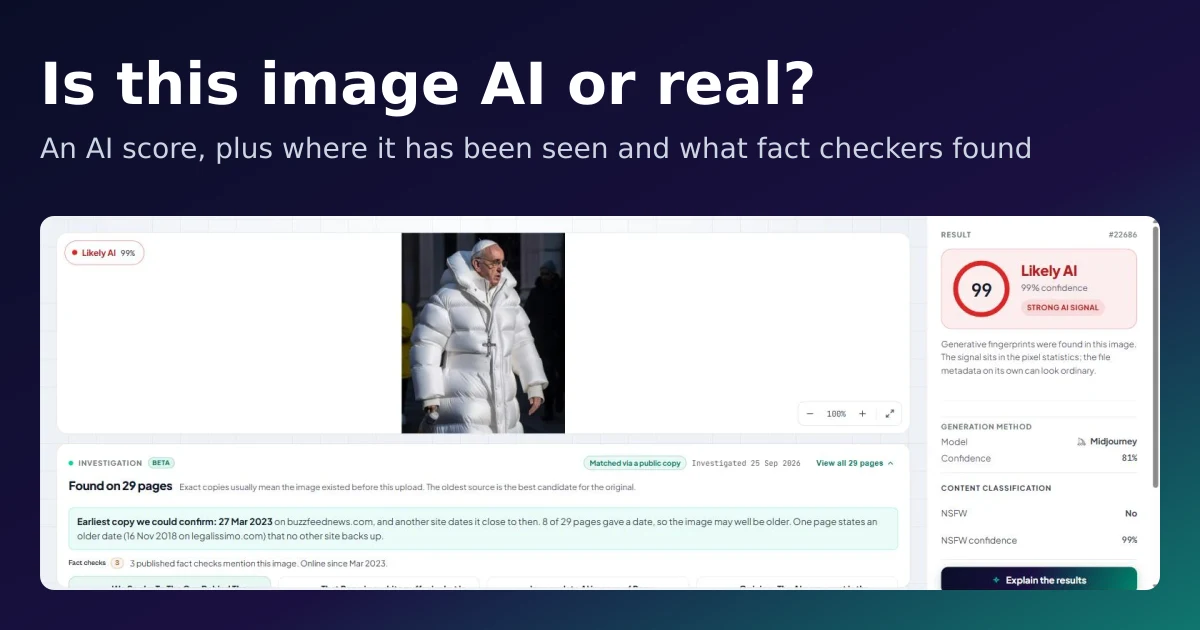
As AI image generators become standard tools for content creators, a pressing question emerges: how does Google treat AI-generated images, and what does that mean for your search rankings?
The answer is nuanced. Google hasn't declared war on AI images, but it hasn't given them a free pass either. Understanding the current picture is essential for anyone building an SEO strategy that incorporates AI visuals.
Google's Stance on AI-Generated Content
Google's official position, updated through its Search Essentials and E-E-A-T guidelines, focuses on content quality rather than how it was produced. The search engine doesn't automatically penalize content simply because it was AI-generated. Instead, Google evaluates whether content, including images, provides genuine value to users.
However, Google has made clear that AI content created primarily to manipulate search rankings violates its spam policies. Mass-produced AI images stuffed into pages with thin content will be treated the same as any other spam tactic.
E-E-A-T and Visual Content
Google's E-E-A-T framework (Experience, Expertise, Authoritativeness, and Trustworthiness) extends to images. Here's how each dimension applies:
- Experience: Original photos from real experiences (product reviews, travel guides, tutorials) carry signals of first-hand experience that AI images cannot replicate. A restaurant review with actual photos of the food signals authenticity in a way that AI-generated food images never will.
- Expertise: Technical or medical content benefits from real diagrams and images created by subject matter experts. AI-generated medical imagery, for instance, could be inaccurate and undermine perceived expertise.
- Authoritativeness: Stock-style AI images neither help nor hurt authority on their own, but over-reliance on generic AI visuals when real imagery would be expected can weaken your content's authority signals.
- Trustworthiness: This is the big one. If users discover that images they assumed were real are actually AI-generated, trust erodes, and trust directly impacts how people engage with your content.

Image Search and Discoverability
Google Image Search is a significant traffic source for many websites. AI-generated images face some distinct challenges here:
Uniqueness: While each AI image is technically unique, similar prompts produce similar outputs. If thousands of websites use AI to generate "modern office workspace" images, they'll end up with visually similar content, reducing any individual page's distinctiveness in image search.
Metadata signals: Real photographs carry EXIF data (camera model, settings, location, timestamp) that provides search engines with additional context. AI images typically lack this data, removing a potential ranking signal.
Content Credentials (C2PA): The emerging C2PA standard embeds provenance information into images, including whether they were AI-generated. As adoption grows, search engines may factor this transparency signal into their ranking algorithms.
Best Practices for Using AI Images in SEO
If you're incorporating AI-generated images into your content strategy, these practices will help you stay on the right side of both search algorithms and user trust:
- Use real images where authenticity matters. Product pages, testimonials, case studies, and news content should use genuine photographs whenever possible.
- Write descriptive alt text. Whether an image is AI-generated or real, thorough alt text helps search engines understand and index your visual content. Don't use alt text to misrepresent AI images as real photographs.
- Don't rely on images to carry thin content. AI images should supplement valuable written content, not substitute for it. A page with one good image and strong text will outperform a page with ten AI images and filler copy.
- Consider disclosure. While not yet required by Google, labeling AI-generated images builds trust with your audience and future-proofs your content against potential policy changes.
- Optimize image files. Regardless of source, ensure images are properly compressed (WebP format is ideal), sized appropriately, and served responsively. Core Web Vitals don't care whether an image is AI or human-made. Slow images hurt rankings either way.
The Bigger Picture
The SEO impact of AI images is part of a larger shift. As AI-generated content becomes ubiquitous, originality and authenticity become even more valuable as differentiators. Websites that invest in genuine visual content (real photos, custom illustrations, original diagrams) may find themselves with a competitive advantage as search engines get better at identifying and valuing authentic media.
The bottom line: AI images won't tank your rankings on their own, but they won't boost them either. Use them strategically where they add value, keep real images where authenticity matters, and always prioritize the user experience over shortcuts. Not sure if a stock image is AI-generated? Run it through our AI Image Detector before publishing.