
AI Detection
How to Tell If Art Is AI: 6 Signs to Check
People guess wrong about AI art more often than they think. Six checks for illustrations and paintings: linework, signatures, hands, style, process and labels.
On this page
- Can You Tell If Art Is AI Just by Looking?
- 1. Check the Brushwork and Linework
- 2. Is There a Garbled Signature or Nonsense Text?
- 3. Do the Hands, Jewelry and Objects Add Up?
- 4. Watch for a Glossy, Blended Style
- 5. Can the Artist Show Their Process?
- 6. What Do the Labels and a Detector Say?
- Why AI Art Matters for Artists and Buyers
To tell if art is AI, look for a handful of clues and add them up. Check the brushwork or linework, any signature or lettering, the hands and small objects, and the overall style. Then ask the artist how they made it, and check the platform's labels. One clue proves nothing. Several together give you a better sense, though you can still be wrong.
Don't expect to get it right every time. When Scott Alexander ran an online quiz on AI art in 2024, about 11,000 people sorted fifty pictures into human or AI, and the average score was 60.6%. This guide covers illustrations, paintings and digital art. If you're looking at a photo instead, see our guide on how to tell if a photo has been edited with AI.
Key Takeaways
- People are only a little better than chance at this: in a 2025 study, viewers named the right creator 53.51% of the time.
- Mistakes go both ways. Human-made digital art is often wrongly called AI, so treat each sign as a clue to weigh up.
- Garbled lettering and fake signatures are quick red flags. Bad hands are less reliable: by 2023, AI tools were already getting better at them.
- Ask for sketches, work in progress or a timelapse video, and check the platform's AI labels, instead of relying on looks alone.
- A detector gives a probability. Use it together with the other checks before you decide.
Can You Tell If Art Is AI Just by Looking?
Sometimes, but not reliably. In a 2025 study, An eye for AI, 406 U.S. adults looked at ten unlabeled artworks, five made with DALL·E 3 and five by human artists. They named the creator correctly 53.51% of the time, which the author calls "only slightly above chance." They spotted the AI images 66.27% of the time, but "human-created digital artworks were frequently misclassified as machine-made."
The same thing happened in the larger Astral Codex Ten quiz. One human-made piece, Mitchell Stuart's "Victorian Megaship", was the image "which 84% of you thought was AI generated."
So use the six checks below to collect clues, and expect to be wrong sometimes in both directions.
1. Check the Brushwork and Linework
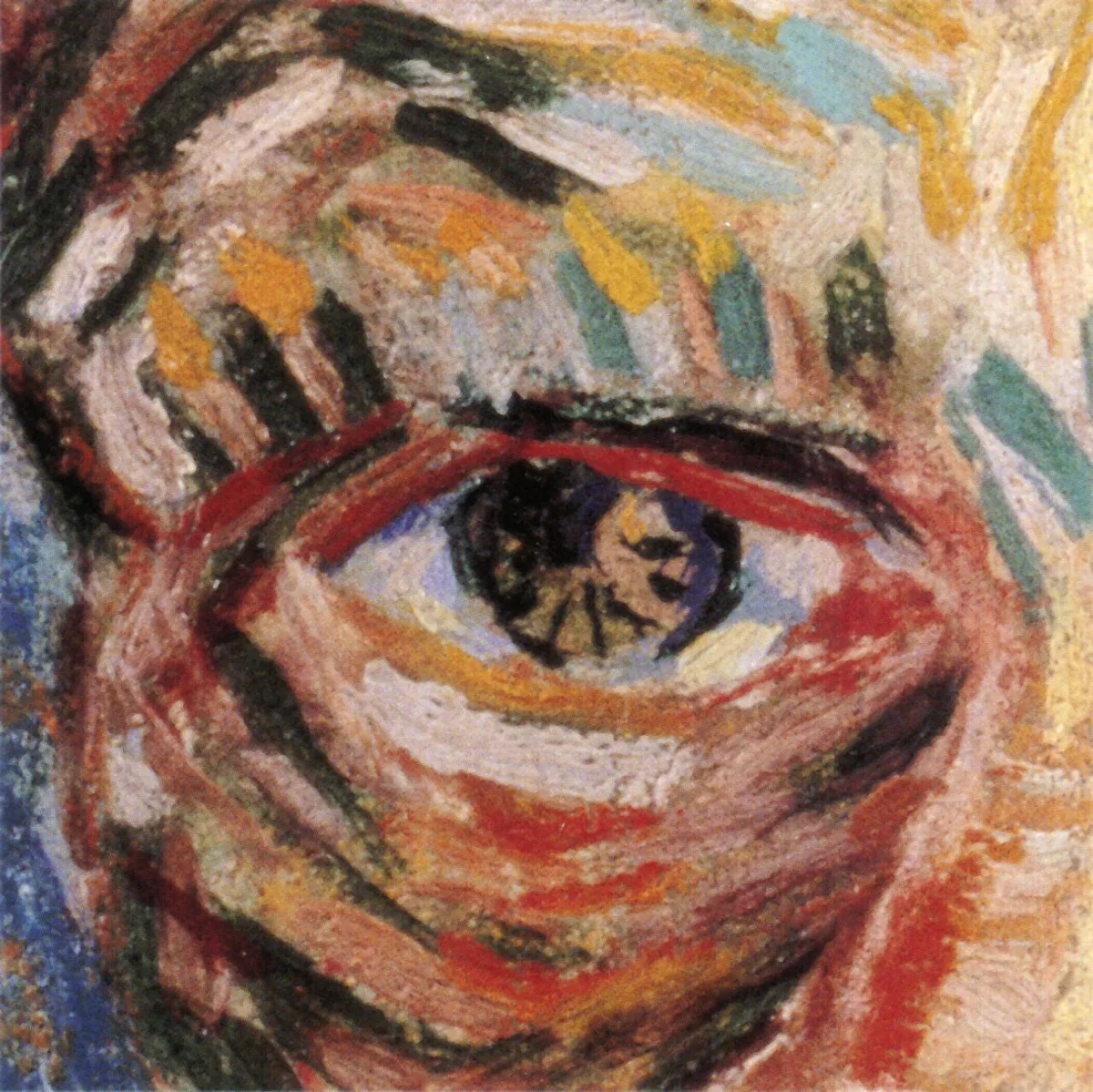
A painter or illustrator makes marks for a reason. A stroke follows the shape it describes, a pen line thins where the pen lifted, and busy areas sit next to quiet ones where the artist kept things simple. AI art often has the look of brushstrokes without that logic. Zoom in and look for strokes that start and stop nowhere, the same "painted" texture spread evenly over sky, skin and stone, and detail that is equally sharp everywhere, with no place for the eye to rest.
2. Is There a Garbled Signature or Nonsense Text?
Generated art often has a smear in a corner that looks like a signature but spells nothing. Any lettering in the scene, like book spines, shop signs or posters, can fall apart when you look closely. Writing for Digital Camera World in 2023, James Paterson described text in AI scenes as "always a garbled mess of nonsense letters and symbols." Broken lettering is still a quick red flag. Clean lettering doesn't prove a person made the piece, though.
3. Do the Hands, Jewelry and Objects Add Up?
Count fingers, then follow the small details: earrings that don't match from one ear to the other, a strap that disappears behind a shoulder and comes back in the wrong place, a staircase or window frame that couldn't be built. Hands are the clue most people know, but in the same article Paterson noted that "the most up-to-date AI tools are getting better with hands, but they still struggle." A perfect hand doesn't settle anything on its own.
4. Watch for a Glossy, Blended Style
A lot of AI art has a familiar finish: very detailed, high contrast, a little plastic, and oddly generic, as if many artists had been blended into one. Look beyond the single image. A human artist's portfolio usually shows a personal voice, recurring subjects and habits that carry from piece to piece. An account that posts a fantasy castle, a lifelike portrait and an anime scene in the same polished finish, with no sketches in between, deserves a closer look.
Some human artists do work in a polished digital style, and the study above found people often mistake their work for AI. Style is a reason to keep checking, and nothing more.
5. Can the Artist Show Their Process?
This check has nothing to do with pixels. Many artists keep something from the making of a piece: rough sketches, the separate layers of a digital file, reference photos or a timelapse video. A piece that arrives with none of that isn't proof of AI, but asking is a fair first step. If you're commissioning or buying a piece, asking politely to see work in progress is normal and fair.
Asking also protects real artists, because false accusations happen. Illustrator David Revoy wrote in August 2026: "Despite creating every piece by hand, despite sharing timelapses, the comments keep coming, and they're getting stronger." Ask about process before you accuse anyone, and give the artist a chance to show it.
6. What Do the Labels and a Detector Say?
Several art and shopping platforms now ask for AI disclosure, so check the listing before you study the pixels:
- Etsy: since 2024, "Sellers must disclose within their listing description if an item is created with the use of AI," according to TechCrunch.
- ArtStation: "Products containing generative AI material must also carry the CreatedWithAI tag," 80.lv reported in September 2026. The same report says the label and filters "have not done enough to prevent generated images" from spreading on the site, so a missing tag isn't proof.
- Adobe Stock: Adobe requires contributors to "label any generative AI content they submit as such."
- Instagram and Facebook: Meta adds "AI info" labels based on industry signals and on what people disclose.
- Pinterest: look for an "AI modified" label at the bottom left of a Pin's close-up.
Some files also carry Content Credentials, a record of how the file was made that its makers compare to "a nutrition label for digital content." The record is digitally signed, so tampering shows. But the Content Authenticity Initiative notes that "it is still common for social media and content platforms to remove metadata," the hidden information stored in a file. So many images you meet online won't have it.
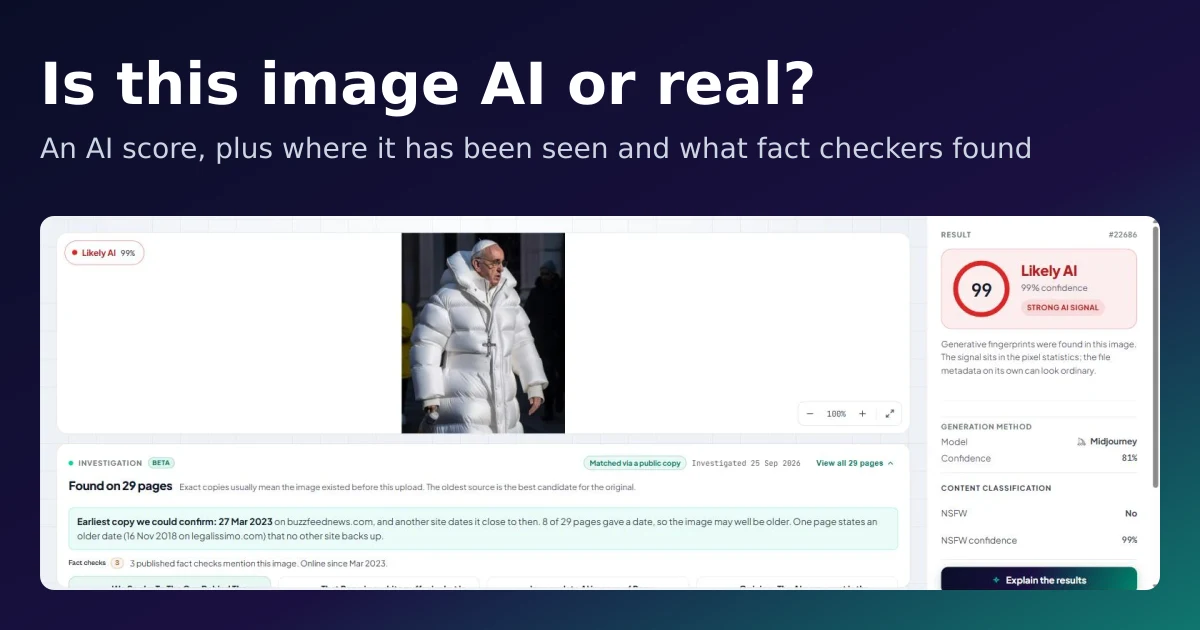
Then upload the image to the IsItAI.com AI image detector. You'll get a probability, shown as "Likely AI-generated", "Possibly AI-generated" or "Likely human-made". With Investigate online turned on, you also see where else the image has appeared online. Detectors make mistakes too. A 2024 study, Organic or Diffused, found that both an automated detector (Hive) and expert artists "do very well, but make mistakes in different ways." Treat the score as one strong clue alongside the five checks above. For a wider list of tools, see our roundup of the best free AI detectors.
Why AI Art Matters for Artists and Buyers
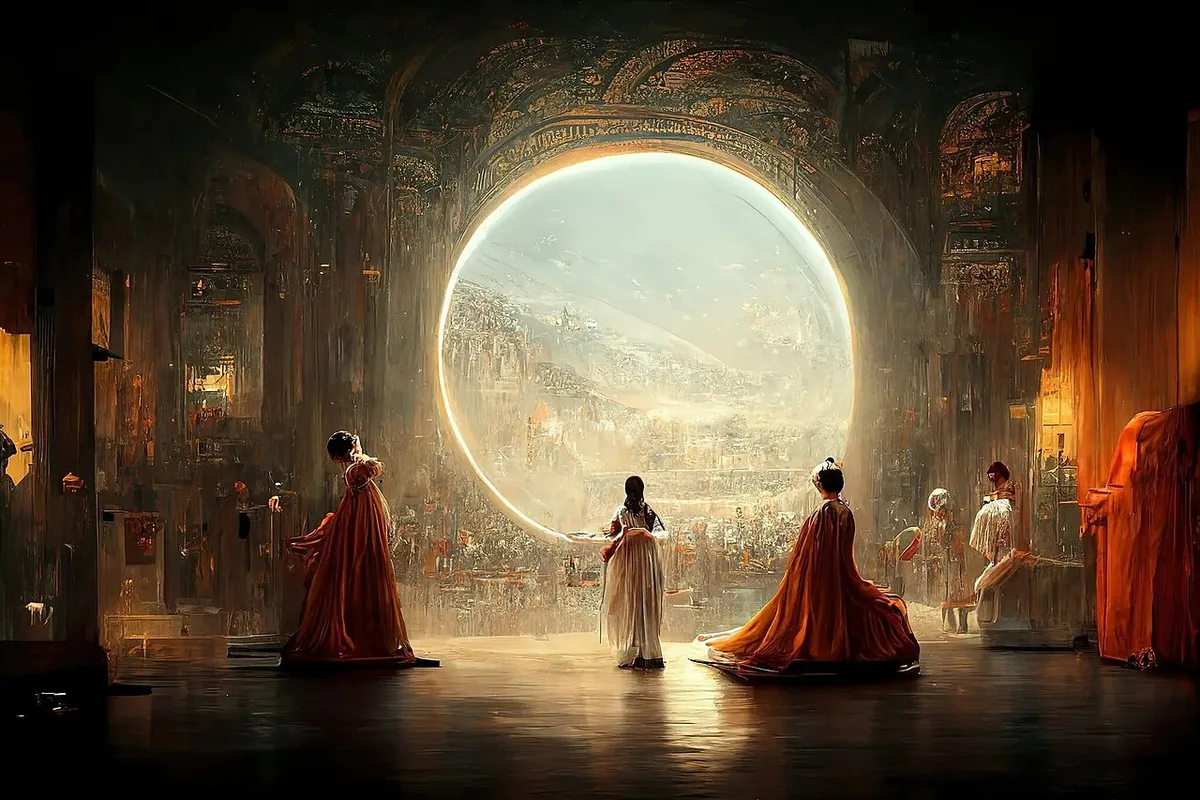
AI art in contests has already caused disputes. In 2022, Jason Allen won first place in the "digital arts / digitally-manipulated photography" category at the Colorado State Fair with "Théâtre D'opéra Spatial." CBS Colorado reported that he made it with the AI tool Midjourney, and that thousands of social media comments called his win unfair. For organizers, buyers and people commissioning art, the simplest fix is to agree on the AI rules up front, in writing, instead of trying to judge a piece afterwards.
For the bigger picture, read about the rise of AI art, or our guide to detecting AI-generated content in text, video and audio.
Check a photo yourself
Upload it to the detector. Investigate online shows where it has appeared before.
Frequently Asked Questions
How can you tell if a drawing is AI-generated?
Look for lines that follow no real technique, a smeared signature or nonsense text, hands and objects that don't add up, and a glossy, generic finish. Then ask the artist for sketches, work in progress or a timelapse. No single sign is proof, and people often mistake human digital art for AI, so weigh several clues before you decide.
Can AI art detectors tell AI art from human art?
They can help, but they give a probability, not a certainty. A 2024 study found that both an automated detector and expert artists did very well, but made mistakes in different ways. Use a detector score as one clue alongside the visual checks, the platform's labels and the artist's process.
Do sellers have to say if their art is AI?
On some platforms, yes. Etsy requires sellers to disclose in the listing description if an item was created with AI, ArtStation asks for a CreatedWithAI tag on products with generative AI material, and Adobe Stock requires contributors to label generative AI content. Rules differ by site, so check the platform's own policy.
Why do people say real art is AI?
Because the visual clues overlap with ordinary human styles and mistakes. In a 2025 study, human-made digital artworks were frequently misclassified as machine-made, and in a 2024 online quiz, 84% of players thought one human-made piece was AI. Asking to see the artist's process is fairer than judging by looks alone.
What is the most reliable way to check?
Find out where the piece came from. A human artist can usually show work in progress, and a platform label or Content Credentials can show how a file was made. When those aren't available, combine the visual checks with an AI image detector and treat the result as likely, not proven.
Sources
- Scott Alexander, How Did You Do On The AI Art Turing Test?, Astral Codex Ten, 20 Nov 2024, retrieved 2026-10-13, astralcodexten.com
- Cunningham, An eye for AI: quantitative insights into viewer ability to identify AI-generated art, Journal of Information, Communication and Ethics in Society, 2025, retrieved 2026-10-13, impact.ornl.gov
- Ha et al., Organic or Diffused: Can We Distinguish Human Art from AI-generated Images?, arXiv:2402.03214, 2024, retrieved 2026-10-13, arxiv.org
- James Paterson, Generative or genuine? My 5 surefire ways to spot an AI-generated image, Digital Camera World, Dec 2023, retrieved 2026-10-13, digitalcameraworld.com
and 11 more
- David Revoy, When online commenters "detect" my art as AI, 5 Aug 2026, retrieved 2026-10-13, davidrevoy.com
- TechCrunch, Etsy's new seller policy on generative AI, 9 Jul 2024, retrieved 2026-10-13, techcrunch.com
- 80.lv, ArtStation will block AI crawlers from scraping artists' work, 3 Sep 2026, retrieved 2026-10-13, 80.lv
- Adobe, Adobe Stock updates to combat deceptive content misuse, 21 Nov 2023, retrieved 2026-10-13, blog.adobe.com
- Meta, Our approach to labeling AI-generated content and manipulated media, Apr 2024, updated Jul 2024, retrieved 2026-10-13, about.fb.com
- Pinterest Help, Gen AI labels, retrieved 2026-10-13, help.pinterest.com
- C2PA, Coalition for Content Provenance and Authenticity, retrieved 2026-10-13, c2pa.org
- Content Authenticity Initiative, How it works, retrieved 2026-10-13, contentauthenticity.org
- Content Authenticity Initiative, Three pillars of provenance, 22 Jan 2026, retrieved 2026-10-13, contentauthenticity.org
- CBS Colorado, Artificial intelligence artwork wins 1st place at Colorado State Fair, 3 Sep 2022, retrieved 2026-10-13, cbsnews.com
- Images: Vincent van Gogh, Self-Portrait with Felt Hat (detail), public domain; Jason M. Allen, Théâtre D'opéra Spatial, tagged public domain; both via Wikimedia Commons
More from the blog

Try AI Image Detection Free
Upload any image and find out if it was generated by AI. Your first 3 checks need no account.